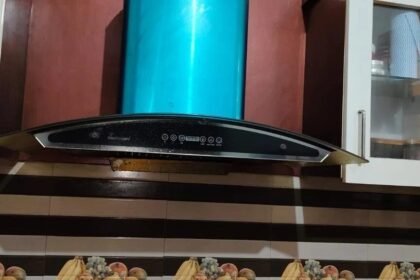
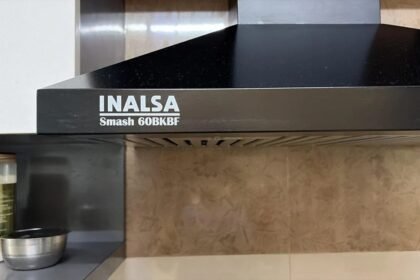
Cold air coming down the chimney in winter: the flap, the cowl and the fix
A ducted chimney is a hole to the outside. What is meant to keep cold air, dust and birds out, why it stops working, and the fixes that do not harm the motor.
“Chimney se thandi hawa aa rahi hai.” In December and January this is one of the most common chimney complaints we hear. The chimney is off, the windows are shut, and yet a steady cold draught comes down through the hood, along with dust, a smell from outside, and sometimes the sound of pigeons in the duct. A ducted chimney is, after all, a hole from your kitchen to the outside. This article explains what is supposed to keep that hole closed, why it stops working, and how to fix it without hurting the chimney.
Why a ducted chimney lets cold air in
A ducted chimney pushes smoke and grease out through a pipe to an outside wall or a shaft. When the motor stops, warm air in the kitchen still rises and cold outside air wants to come in to replace it, especially on a windy night or in a flat where the outlet faces the wind. Three things are meant to stop that:
- A non-return flap (backdraft damper) at the top of the chimney body where the duct joins it, or in a collar on the duct. It opens when the motor pushes air out and falls shut when the motor stops.
- A cowl or louvre at the outside end of the duct, with flaps that close by gravity and keep out rain, birds and wind.
- A sealed wall opening. The gap between the duct and the hole in the wall should be filled, so air cannot leak around the pipe.
Any one of these missing or stuck is enough to give you a cold kitchen.
Why the flap stops closing
The flap is light on purpose, so the motor can open it easily. That also makes it easy to stop:
- Grease. Indian cooking sends oil vapour up the duct every day. Over a year or two it coats the flap and its hinge, and the flap sticks half-open or does not swing at all.
- A missing flap. Some installations skip it, or a flap that rattled was removed at some point and never replaced.
- A bent duct. Flexible aluminium duct that was squeezed to fit can press on the flap and hold it open.
- A damaged outside cowl. Sun and rain crack plastic louvres; birds pull them open to nest. Then wind blows straight down the pipe.
What you can check yourself
Without opening anything:
- With the motor off, hold your hand under the hood. A steady cold flow means air is coming down the duct.
- Switch the motor on at low speed and listen for a soft clack when you switch it off again. That is a flap falling shut. Silence can mean it is stuck.
- Look at the outside end of the duct from a window or the balcony, without leaning out or climbing. Check whether the cowl is there, whether its flaps hang shut, and whether there is a nest or a gap around the pipe.
- Look at where the duct meets the wall inside. A visible gap, or daylight, means the opening needs sealing.
Do not open the chimney body or remove the motor cover to get at the flap. The motor, its capacitor and the wiring sit right next to it. And do not climb onto a ledge or lean out of an upper-floor window to reach the outside cowl: that is a job for a technician with the right ladder and safety line.
What not to do: blocking the duct
The quick fix many homes try is to stuff a cloth or a polythene bag into the duct, or tape the outlet shut for the winter. It does stop the draught. The trouble starts the first time someone switches the chimney on without remembering: the motor pushes against a closed pipe, runs hot, and suction collapses so the smoke from the tadka goes everywhere. A motor that runs against a blocked duct again and again can fail early. If you want to close the duct for a few months, use a proper cap that is easy to see, and stick a note on the switch.
The proper fixes
- Clean or replace the flap. Often the flap only needs its grease removed and its hinge freed. If it is cracked or warped, a matching collar with a new flap is fitted.
- Fit a gravity cowl outside. A cowl with flaps that close by their own weight stops wind and rain at the outlet. It should not reduce the duct’s diameter.
- Seal the wall opening around the duct, inside and out, with a sealant suited to the wall and to some heat.
- Straighten the duct. A shorter duct with fewer bends lets the flap open and close freely, and improves suction at the same time.
Winter brings another problem: drips
Warm, moist air from cooking meets a cold duct and condenses. The water mixes with grease and runs back into the chimney, sometimes dripping onto the hob as a brown, oily liquid. A clean duct with a slight downward slope towards the outside, and an outlet that is not open to the wind, reduces this. Running the chimney for ten minutes after cooking also clears warm air out before it settles. If oil drips continue, the filters and the oil collector need cleaning: see which filter needs what care.
Ductless chimneys
A ductless (recirculating) chimney has no pipe to the outside, so it cannot let cold air in. If you have a ductless chimney and still feel a draught at the hood, the air is coming from somewhere else, such as a gap around a cabinet or an exhaust fan opening nearby. If you are deciding between the two, read ducted or ductless in a flat.
Questions people ask
Chimney ke pipe mein kabootar ghus gaye hain, kya karein?
Do not run the chimney until the duct is cleared: nesting material can block the flap and the motor. A technician clears the duct, cleans it and fits a cowl with flaps at the outlet so birds cannot get back in.
Is it safe to keep the duct closed all winter?
Only if the chimney cannot be switched on by mistake. A closed duct with the motor running harms the motor. A working flap and cowl are the better answer, because you can still use the chimney every day.
Will a flap reduce suction?
A clean, correctly fitted flap opens fully with the motor’s push and has almost no effect on suction. A greasy, half-stuck flap does reduce it, which is one more reason to keep it clean.
If cold air, dust or drips come down your chimney this winter, book a chimney service and mention the draught, so the technician checks the flap, the duct and the outside cowl along with the filters. A visiting charge applies, and you are told the cost of any part before it is fitted.
Want this done?
Chimney Service & Cleaning across Chandigarh, Mohali, Panchkula, Zirakpur, Delhi, Faridkot, Gurugram, Noida, Pune. No advance — you pay after the job.
Book Chimney Service & CleaningCall +91 92708 07381