Moving house with a gas stove or hob: disconnect, carry and reconnect safely
On this page (7)
The paperwork for LPG and PNG, who disconnects what, how to pack a stove or hob and carry the cylinder, and the checks before the first meal in the new home.
Packing a kitchen for a move is mostly boxes and newspaper. The gas stove, the hob and the cylinder are different: they carry gas, and the moment they are disconnected and reconnected is when leaks are most likely. “Shifting ke time gas stove kaise le jayein?” is a question worth answering before the packers arrive, not on the day. This article covers the gas connection, the stove or hob itself, and the first meal in the new home.
A week before: the paperwork
- LPG within the same distributor’s area. Tell your distributor your new address so deliveries go to the right place.
- LPG to another city or another distributor. Your distributor can give you the papers to transfer your connection, so you can carry the subscription to a distributor near the new home instead of starting from nothing. Ask what you need to return or carry, and keep the subscription voucher safe.
- Piped gas (PNG) at the old home. Apply to your gas company to disconnect or close the account and for a final meter reading. They close and cap the connection.
- Piped gas at the new home. If the new home has PNG, apply early for a new connection or a transfer. It can take time.
The day before: disconnecting
Gas connections are not for DIY. Closing a regulator or a valve is fine. Taking off the regulator, unscrewing hoses, removing a built-in hob from its connection or capping a gas point should be done by a gas technician or your gas company, who checks that nothing is left open.
- Cook the last meal, let the stove cool, and close the regulator on the cylinder or the appliance valve on the PNG line.
- Have the technician disconnect the stove or hob, remove the regulator from the cylinder and fit the cylinder’s safety cap.
- For PNG, the gas company caps the line. Do not leave a hose hanging from an open valve.
- For a built-in hob, the technician lifts it out of the cutout, disconnects its gas inlet and ignition supply, and caps the gas point.
Packing the stove or hob
- Clean and dry it first. Grease attracts dust in a moving truck and becomes a sticky mess.
- Remove the pan supports, burner caps and burner heads. Wrap them separately and pack them in one labelled box so they are not lost.
- Protect the glass. A glass-top stove or hob should travel flat, glass side up, with cardboard over the glass and nothing heavy stacked on it. Glass breaks more often from a point load than from a fall.
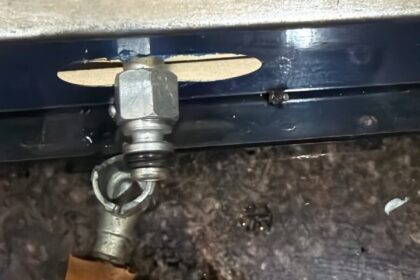
- Protect the knobs and the inlet. Wrap them so they are not snapped off or bent. A bent gas inlet will not seal properly at the new home.
- Keep the manual and any spare jets in the same box. You will need them if the new home has a different gas.
The cylinder
- Travel only with the safety cap fitted and the regulator off.
- Keep it upright, wedged so it cannot roll or fall. Never on its side.
- Do not leave it in a closed car or a truck in the sun for hours.
- Do not pack it in a closed box with other goods, and do not put anything on top of it.
- Do not smoke near it, and keep it away from the vehicle’s battery and engine area.
Ask your distributor about any rules for carrying a filled cylinder to another city, and whether it is better to carry it or to get a fresh one at the new place.
At the new home: before the first meal
- Check what gas the new home uses. If you move from LPG to PNG or the other way round, the stove’s or hob’s jets must be changed for that gas. See what changes from LPG to PNG.
- Look at the hose. If it is near or past the date printed on it, or hard and cracked, replace it now. Moving is the right time. Our article on rubber pipe or steel braided hose explains the choice.
- Check the regulator. A regulator that was dropped or knocked in transit should be looked at before use.
- Place the stove on a level, firm platform, away from curtains and windows that open over it, with the hose short and visible.
- Get the connection tested. Every joint, from the regulator or valve to the stove, should be leak-tested before the first burner is lit.
For a built-in hob, the new counter’s cutout must match. If it does not, read what needs to change. The cabinet under the hob also needs ventilation and access to the gas point. Our gas safety checklist for a rented flat is a useful walk-through for any new home.
Things that often go wrong
- Burner caps from one burner put on another, giving an uneven flame.
- Water in the burners from cleaning before packing, stopping the ignition until it dries.
- A long hose borrowed from somewhere to reach a badly placed gas point.
- A battery ignition cell left in during the move and leaking.
Questions people ask
Shifting ke baad gas stove khud laga sakte hain?
Placing the stove is easy; making the gas connection is not. Fitting the regulator, the hose and the clamps, and leak-testing them, is a technician’s job. A missed joint is the most common cause of a leak after a move.
Kya purana pipe naye ghar mein use kar sakte hain?
Only if it is well within the date printed on it and in perfect condition. If in any doubt, a new, approved hose is a small step for a lot of safety.
Can a hob from the old kitchen fit the new one?
Only if the new countertop’s cutout matches the hob’s size. Measure before the move and plan the change if it does not.
When you move, book a gas stove visit to disconnect safely at the old home and to connect and leak-test at the new one. For a built-in hob, book a hob visit. A visiting charge applies, and you are told the cost of any part before it is fitted.
Want this done?
Gas Stove (Chulha) Repair across Chandigarh, Mohali, Panchkula, Zirakpur, Ahmedabad, Dehradun, Delhi, Faridkot, Gurugram, Indore, Ludhiana, Mumbai, Noida, Pune. No advance — you pay after the job.
Book Gas Stove (Chulha) RepairCall +91 92708 07381